
Post #2
Book to Movie: Oppenheimer
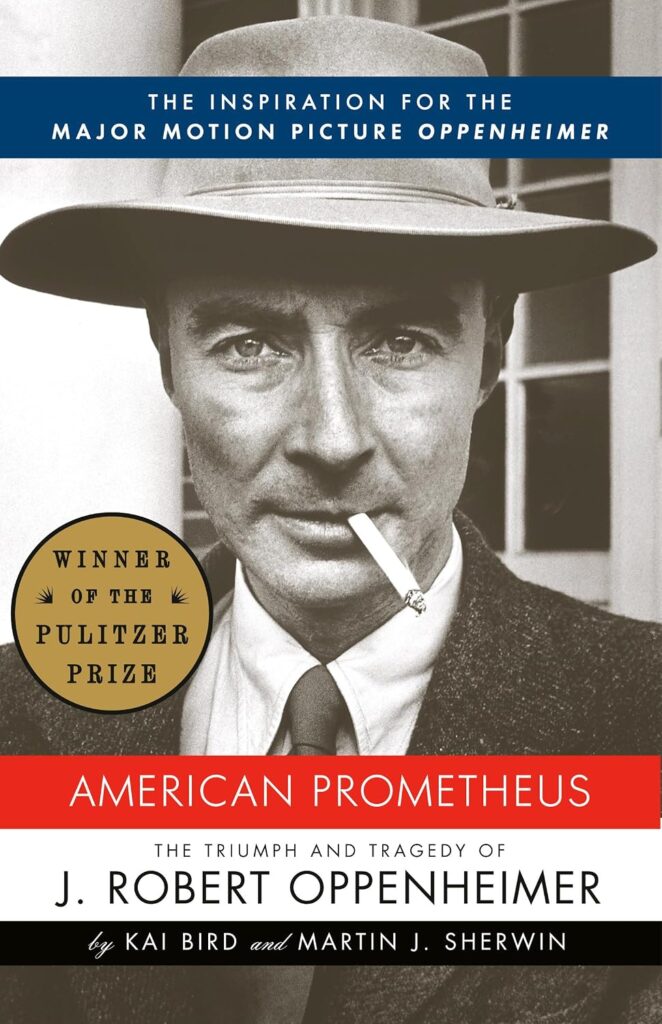

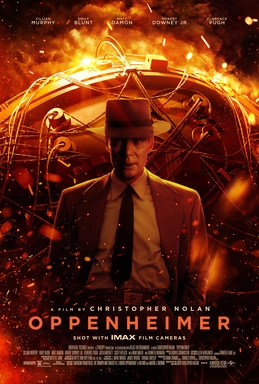
Nolan could have made a cleaner, more emotionally direct film by focusing only on Oppenheimer’s 1954 security-clearance hearing. That alone would have shown how the bomb came back to haunt, expose, and destroy him.
So why include Strauss’ 1959 confirmation hearing? I think Nolan wanted more than “Oppenheimer was destroyed.” He wanted a dual point-of-view structure: Oppenheimer’s subjective tragedy in color, and Strauss’s colder political counter-story in black-and-white. The movie identifies the two narrative strands as Fission and Fusion… but more on that later.
I think Nolan included Strauss’s hearing for several reasons:
- It gives the film an antagonist that the audience can root against.
The 1954 hearing alone has several antagonistic forces: Robb, Teller, anti-communism, the AEC, Cold War paranoia, the H-bomb debate. But those are diffuse. Strauss gives the system a human face.
- It turns the movie into a mystery
The Strauss hearing lets Nolan delay the meaning of the Einstein scene. Earlier, Strauss sees Einstein and Oppenheimer talking by the pond. Later, Einstein walks past Strauss completely ignoring him. Strauss assumes the conversation was about him. That assumption feeds his resentment. At the end, we learn Strauss was wrong. The conversation was not about Strauss at all. It was about the nuclear chain reaction — not literal atmospheric ignition, but the arms race and the possibility of destroying the world.
The Strauss’s hearing gives Nolan a structural trick:
Strauss thinks he is the center of the story. The ending reveals that he is not. Strauss’s vanity is contrasted with Oppenheimer’s cosmic dread.
- It creates poetic justice: the judge is judged
In 1954, Oppenheimer is judged. In 1959, Strauss is judged.
That symmetry is clearly attractive to Nolan. The man who helped engineer Oppenheimer’s downfall later faces a public reckoning of his own. Historically, Strauss helped shape the 1954 process: he selected the hearing board and Roger Robb, the attorney who prosecuted Oppenheimer’s case; Strauss also had access to FBI material Oppenheimer’s lawyers did not.
The 1959 hearing gives the film a dramatic reversal: Oppenheimer loses power. Strauss tries to gain greater power. The past returns and blocks him. That’s dramatically satisfying for the audience, even if it simplifies the real confirmation battle.
What Nolan lost by including the 1959 hearing
The drawbacks are real:
- It splits the emotional focus.
When we want to stay with Oppenheimer’s moral collapse, the film asks us to invest in Strauss’s political fate.
- It gives Strauss near-equal structural importance.
Historically, Strauss is important, but he is not the story’s existential center. In the movie, he sometimes feels like the second main character.
- It simplifies Strauss’s 1959 defeat.
In reality, Strauss’s failed confirmation involved many issues: his temperament, secrecy, clashes with Congress, AEC controversies, and his role in the Oppenheimer affair. The film narrows the defeat so that it feels mainly like fallout from Oppenheimer.
- It increases cognitive load.
The viewer must track three simultaneous timelines in mind – the 1940’s (color), the 1954 hearing (color) vs 1959 confirmation (black-and-white); the making of the bomb, Oppenheimer’s hearing vs Strauss’s hearing. That is a lot.
- It risks making the film feel like two movies.
One movie is about the making of the bomb and Oppenheimer’s guilt. The other is about Strauss’s resentment and political failure.
Was it the right choice? I think so. Had Nolan stayed with the bomb and the 1954 hearing alone, Oppenheimer might have become an exceptional historical reconstruction, but a less dramatically satisfying film. By adding Strauss’s confirmation hearing, Nolan gives the story an antagonist, a mystery, and a measure of poetic justice. The trade-off is additional structural complexity, but in my view the gains outweigh the losses. Like many of Nolan’s best decisions, it asks more of the audience while rewarding them for paying attention.