
Post #2
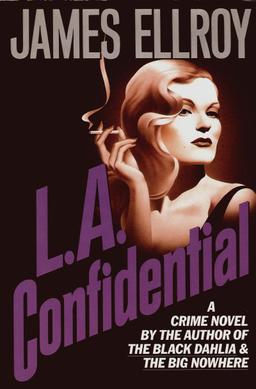
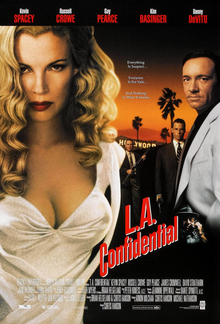
Book to Movie: LA Confidential

Plotline 4: Pierce Patchett’s Fleur-de-Lis Call Girl Service
Pierce Patchett’s Fleur-de-Lis operation is not merely a vice business. It is surveillance disguised as fantasy. Patchett, a financier with a chemist’s discipline and a strategist’s patience, constructs an enterprise that produces both revenue and intelligence. Money flows in. Secrets accumulate.
With the help of plastic surgeon Dr. Terry Lux, Patchett reshapes young women into approximations of Hollywood icons. The transformation is not cosmetic indulgence but calculated branding. His most valuable creation, Lynn Bracken, is engineered to echo Veronica Lake’s image. These women function as more than escorts. They are trained collectors of information, extracting vulnerabilities, indiscretions, and leverage from clients whose wealth and power make them useful. In some cases, they go further, taking wax impressions of door locks and turning intimacy into physical access.
The operation reaches beyond sex and secrets. Patchett’s background in chemistry and his ties to Doc Engleking, himself linked to Mickey Cohen’s network, embed Fleur-de-Lis within the narcotics economy. Using heroin stolen from Cohen and later controlled by Dudley Smith, Patchett develops refined compounds and prepares for scaled distribution. Fleur-de-Lis is infrastructure, a social gateway that supports criminal logistics.
Expansion brings instability. As the network widens, knowledge disperses. In Ellroy’s Los Angeles, knowledge is risk. The effort to contain that risk leads directly to the Nite Owl massacre, where information management collapses into violence.
Patchett ultimately becomes expendable within the system he helped construct. During Smith’s consolidation of power in 1958, he is murdered by Smith’s associates. His holdings are absorbed, his secrets redistributed, and his illusion of control dissolves. Fleur-de-Lis illustrates a central pattern of the novel: refined architecture built for profit eventually feeds a machine that consumes its own architects.
From an adaptation perspective, this plotline presents one of the screenplay’s most difficult compression problems. Its functions are numerous. It supplies motive, connects characters, expands the criminal economy, and introduces thematic reflections on identity and manufactured appearance. Hanson and Helgeland preserve its symbolic core while streamlining its narrative complexity, a reminder that adaptation often prioritizes structural function over encyclopedic detail.
Plotline 5: The Nite Owl Diner Massacre
The Nite Owl massacre erupts in April 1953, killing six people and transforming hidden corruption into public spectacle. Within Ellroy’s architecture, it serves two purposes. It lets Dudley Smith eliminate liabilities within his network, and it gives Edmund Exley the moment of public heroism that accelerates his ascent.
Among the victims is Mal Lunceford, who witnessed Smith execute Buzz Meeks years earlier. He possesses knowledge that has become dangerous. Another intended target is Dean Van Gilden, operating under the identity of Duke Cathcart, a smut merchant whose independence threatens Smith and Patchett’s emerging control over vice distribution. The attack is strategic cleansing masquerading as random carnage.
Smith engineers the aftermath as carefully as the violence. Evidence is planted on three Black suspects already linked in the public imagination to the assault on college student Inez Soto. The narrative is ready-made. Complexity is unnecessary when outrage can be redirected.
Exley seizes the opportunity. He extracts confessions and later kills the unarmed suspects during a staged escape attempt. The act seals the official story. The men become the perpetrators. Exley becomes “L.A.’s Greatest Hero.” Truth is irrelevant. Narrative efficiency prevails.
Years later, the fiction begins to crack. New evidence and Bud White’s persistence reopen the case. The real participants are identified but never testify, dying during a prison transfer shootout known nationally as the “Blue Denim Massacre.” Closure arrives theatrically rather than judicially.
The massacre demonstrates Ellroy’s central thesis: justice is authored, staged, and marketed. Violence begins the story. Institutional storytelling finishes it.
For adaptation, this plotline becomes the screenplay’s gravitational center. Hanson and Helgeland restructure the narrative around it, reducing surrounding threads so the massacre functions as both midpoint engine and thematic anchor. This decision exemplifies how adaptation replaces narrative sprawl with focal intensity.
Plotline 6: The Pornographic Picture-Book Murders
This is the novel’s most unsettling and conceptually ambitious thread. It binds contemporary crime to an institutional cover-up stretching back decades, exposing moral decay beneath civic mythology. At its heart lies the Exley family legacy, publicly associated with justice yet privately entangled in compromise.
The contemporary strand begins with pornographer Duke Cathcart, who proposes producing explicit photographic books for wealthy clients. He approaches the Engleking brothers, printers tied to earlier narcotics operations, and suggests mob financing. Mickey Cohen rejects the venture. Cathcart instead aligns with Pierce Patchett, folding the material into Fleur-de-Lis distribution channels.
Jack Vincennes encounters traces of the racket through recurring advertising cards promising customized gratification. His investigation leads to Lamar Hinton, a parole-vulnerable courier who confirms links between the books and Patchett. Vincennes passes confiscated material to Ed Exley, revealing layered horrors.
The initial volumes depict explicit staged imagery. Beneath them lie bound collections of extreme violence rendered through manipulated photographs and ink embellishment. One spread mirrors the mutilation pattern of Sid Hudgens’s murder, transforming pornography into documentation. The material is evidence disguised as product.
The final discovery connects the present to the past. Exley recognizes visual patterns identical to those found in crime-scene photographs from the 1934 child murders investigated by his father. The implication is unavoidable. The same aesthetic signature links both atrocities.
The buried history emerges. The true killer is Douglas Borchard, illegitimate son of studio magnate Raymond Dieterling, shaped by early exposure to grotesque material and later shielded through bribery, surgical alteration, and chemical sedation arranged through Patchett and Lux. A scapegoat is executed. Institutional reputation survives.
Years later, the concealment deepens when Preston Exley collaborates in staging the death of Dieterling’s legitimate son to preserve the narrative. Law enforcement becomes participant rather than arbiter.
Raymond Dieterling’s eventual confession to Ed Exley completes the thematic circle. The Exley name, synonymous with order, rests upon buried brutality. The pornographic murders are not an anomaly but an inheritance.
From an adaptation standpoint, this plotline represents the most drastic compression in the screenplay. Its psychological, historical, and conspiratorial density resists cinematic containment. Hanson and Helgeland distill its thematic residue into character motivation and tonal texture rather than literal narrative reproduction. The result demonstrates a key adaptation principle: not every thread survives intact, but its emotional and moral consequences can be translated into atmosphere, implication, and character weight.